
WELCOME BONUS 300%
UP TO €2000 + 100
FREE SPINS
UP TO €2000 + 100
FREE SPINS
Home → Blackjack
Blackjack at SlotsPlus Casino: Variants, Rules and Payouts
Which Rule Variants the Software Shows
Blackjack Single deck, classic rules, 3:2 runs at an RTP of 99.85% with a house edge of 0.15%, the lowest figure among the blackjack variants on this page. The house edge is the average share of each stake that the casino keeps, so 100 EUR of stakes cost 0.15 EUR on average at this table. Fewer decks lower the edge, and one deck gives about −0.48 percentage points compared with 8 decks, though the advantage is often offset by a 6:5 payout.
Blackjack 6:5 payout instead of 3:2 over 6 decks carries an RTP of 98.15% and a house edge of 1.85%. Replacing 3:2 with 6:5 adds exactly +1.39 percentage points to the casino's edge, more than any other rule change. On a €10 bet a blackjack pays €12 instead of €15, a difference of €3 on the same hand.
Blackjack 6 decks, S17, DAS, DOA, 3:2 payout with basic strategy reaches an RTP of 99.54% and a house edge of 0.46%. The dealer stands on soft 17, doubling down on any first two cards is allowed, doubling after a split is allowed, and no surrender is offered. Basic strategy is required to reach this figure, and insurance pays 2:1 while a regular win pays 1:1.
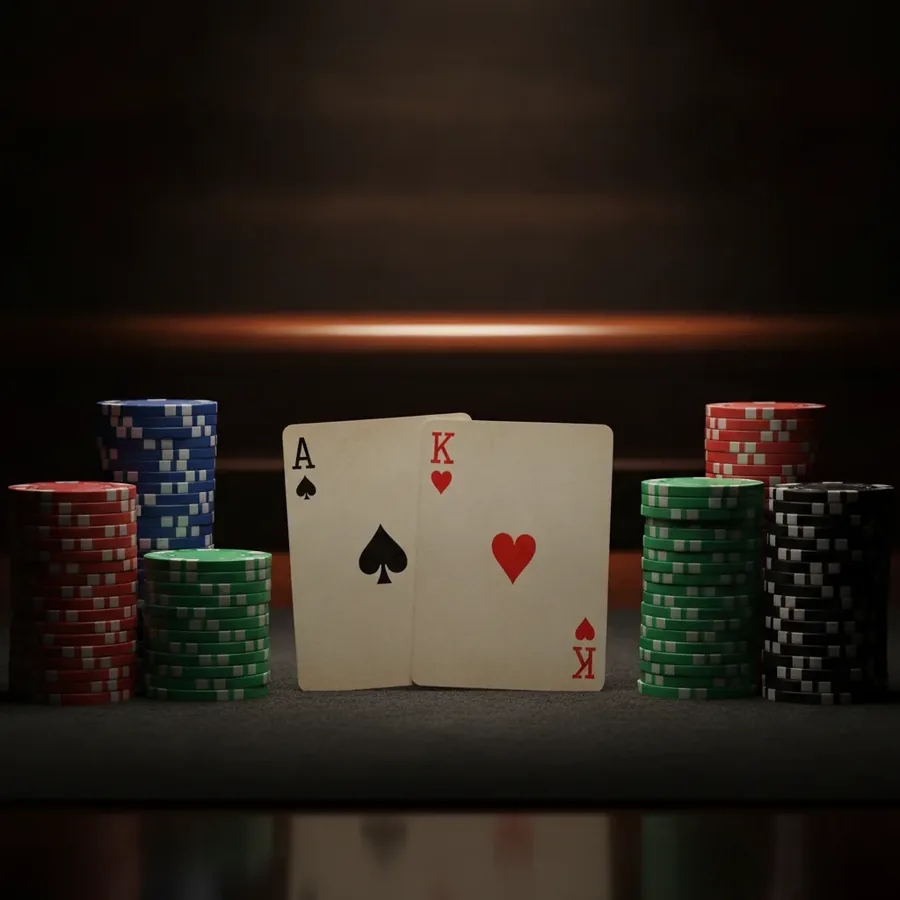
Place Side Bets Before the Cards Are Dealt
Blackjack Insurance over 6–8 decks shows an RTP of 92.53% and a house edge of 7.47%, a separate side bet of up to 50% of the main bet placed when the dealer shows an ace. A side bet is a wager that sits next to the main hand and settles on its own outcome. On a €100 main bet the maximum insurance stake is €50.
Basic strategy always declines insurance, except for card counters at a true count of +3 or higher. With a single deck the edge is about 5.88%, compared with 7.47% over 6–8 decks. Insurance pays 2:1 but lowers the return in the long run, so a €50 insurance stake returns less on average than the same €50 left on the main bet.
Infinite Blackjack from Evolution carries an RTP of 99.47% and offers 4 side bets: Any Pair, 21+3, Hot 3 and Bust It. The bet range runs from 1 EUR to 5,000 EUR and seats at the table are unlimited.
Surrender or Play On With 16 Against a 10
Late surrender lets the player give up the hand after the dealer has checked for blackjack and lose half the stake, returning 50% of it. The rule improves RTP by about 0.08 percentage points, which is a house edge of −0.08 percentage points. On a €10 hand, surrender costs €5 instead of the full €10.
Blackjack Liberal Vegas Strip combines liberal rules with a 3:2 payout and reaches an RTP of 99.72% with a house edge of 0.28%. The rule set is S17 + DAS + resplit + late surrender, the most player-friendly combination here, and standard deviation is 1.15. Against a dealer 10, playing out a 16 risks the full stake, while surrender locks the loss at half.
Early surrender is worth much more than the late version, up to −0.6 percentage points, but it is extremely rare. Late surrender only applies after the dealer has checked for blackjack, so the player cannot escape a dealer blackjack. Insurance pays 2:1 and is a separate wager, not a substitute for surrender.
Double Down or Just Hit on 11
Doubling after a split improves RTP by about 0.14 percentage points, and resplitting aces improves it by 0.08 percentage points. A double doubles the stake and draws exactly one card, so on a €50 bet the total at risk becomes €100. A simple hit keeps the stake at €50 and allows further cards.
The dealer hitting soft 17 lowers RTP by 0.22 percentage points, the largest negative rule effect listed. Blackjack 6 decks, S17, DAS, DOA, 3:2 payout runs at 99.54% RTP and 0.46% house edge, and that figure assumes basic strategy is followed. Moving from 6 decks to 8 decks costs about 0.02 percentage points.
Blackjack Party from Evolution has a bet range of 1.00 EUR to 1,000 EUR and runs with two hosts. Lightning Blackjack from Evolution spreads bets from 1 EUR to 2,500 EUR, and Infinite Blackjack from Evolution spreads bets from 1 EUR to 5,000 EUR. Doubling on 11 commits a second unit, while a hit commits nothing further.
Early Surrender Is Gone From Many Tables
Blackjack Liberal Vegas Strip lists late surrender inside a rule set with an RTP of 99.72% and a house edge of 0.28%. Early surrender is worth up to −0.6 percentage points, far above the −0.08 percentage points of the late version. The gap between the two is about 0.52 percentage points of return.
Blackjack Single deck, classic rules, 3:2 pays a blackjack at 3:2 and wins at 1:1, with an RTP of 99.85% and a house edge of 0.15%. Insurance pays 2:1 as a separate side bet. Neither payout structure replaces the value that early surrender adds when it is present.
Blackjack 6:5 payout instead of 3:2 over 6 decks shows an RTP of 98.15% and a house edge of 1.85%. A €10 blackjack pays €12 instead of €15 under that rule. Removing early surrender from a table therefore stacks on top of the +1.39 percentage points that the 6:5 change already adds.
Blackjack variants at a glance
| Variant | Payout | House edge | Rule | RTP |
|---|---|---|---|---|
| Blackjack 6:5 payout instead of 3:2 (6 decks) | Blackjack 6:5, win 1:1 | 1.85% | Replacing 3:2 with 6:5 adds exactly +1.39 percentage points to the casino's edge – more than any other rule change. On a €10 bet a blackjack pays €12 instead of €15. | 98.15% |
| Blackjack Insurance (6–8 decks) | Insurance 2:1 | 7.47% | Separate side bet of up to 50% of the main bet when the dealer shows an ace. Basic strategy ALWAYS declines it (except for card counters at a true count ≥ +3). With a single deck the edge is ≈ 5.88% | 92.53% |
| Blackjack Split / double / H17 – rule effects | Double – stake ×2 with one card; split – up to 4 hands; split aces usually get one card each. | H17 +0.22 percentage points; RSA −0.08 percentage points; DAS −0.14 percentage points | Dealer hitting soft 17 lowers RTP by 0.22 percentage points; resplitting aces improves it by 0.08 percentage points; doubling after a split improves it by about 0.14 percentage points; 6 decks instead of 8 – about 0.02 percentage points. | n/a (rule modifiers) |
| Blackjack Single deck, classic rules, 3:2 | Blackjack 3:2, win 1:1 | 0.15% | Fewer decks = lower edge; one deck gives about −0.48 percentage points compared with 8 decks. Often offset by a 6:5 payout. | 99.85% |
| Blackjack Surrender (late surrender) – rule effect | 50% of the stake returned | −0.08 percentage points | The player gives up the hand after the dealer has checked for blackjack and loses half the stake. Improves RTP by about 0.08 percentage points. Early surrender is worth much more (up to −0.6 percentage points) but is extremely rare. | n/a (rule modifier) |
| Blackjack 6 decks, S17, DAS, DOA, 3:2 payout, basic strategy | Blackjack 3:2, regular win 1:1, insurance 2:1 | 0.46% | Dealer stands on soft 17; double down on any first two cards; doubling after a split allowed; no surrender. Basic strategy is required to reach this figure | 99.54% |
When Can You Raise Your Bet?
Blackjack allows a player to raise the bet mid-hand through doubling down or splitting pairs, and the live table Lightning Blackjack from Evolution has a bet range of 1 EUR to 2,500 EUR. Doubling down doubles the original stake and deals exactly one more card, while splitting creates up to four separate hands from a pair. Both actions are permitted only on the first two cards of a hand and are subject to the table rules in force.
Whether these options are available depends on the specific rule set: in the 6-deck game with S17, DAS, DOA and a 3:2 payout, doubling after a split is allowed and the house edge is 0.46%. By contrast, removing that same rule raises the house edge by about 0.14 percentage points, and resplitting aces lowers it by 0.08 percentage points. The dealer hitting soft 17 adds 0.22 percentage points to the casino's edge. A player can therefore raise the bet only when the table's rules explicitly permit it.
The financial effect of raising the bet is direct: on a €10 stake, a blackjack paid at 3:2 returns €15, while a 6:5 payout returns only €12. Insurance, a separate side bet of up to 50% of the main bet when the dealer shows an ace, pays 2:1 but carries a house edge of 7.47%. Basic strategy always declines insurance, so raising the bet through insurance is not a recommended way to increase the stake.
A Side Bet Every Round: The Budget Lasts 30 Rounds
Blackjack Insurance carries an RTP of 92.53% on a separate side bet of up to 50% of the main bet when the dealer shows an ace. The house edge of 7.47% is far higher than the 0.28% on Liberal Vegas Strip blackjack, so the side bet drains a bankroll roughly 26 times faster per euro staked. On a €10 main bet with a €5 insurance wager, the expected loss per round is about 37 cents on the insurance alone.
A player who places a side bet every round can calculate the effect directly: a €100 budget divided into €5 side bets lasts 20 rounds on the side bet alone, and adding a €10 main bet means €15 per round, so the budget lasts about 30 rounds with a €100 bankroll. The 92.53% RTP means €100 of insurance stakes costs €7.47 on average, which is €7.47 of unavoidable long-run loss.
Infinite Blackjack offers four side bets named Any Pair, 21+3, Hot 3 and Bust It, with a main-game RTP of 99.47%. The side bets are optional and unlimited players can join the same table. A player who takes one side bet every round faces a faster budget burn than one who sticks to the main bet range of €1 to €5,000, because side-bet returns are generally lower than the main blackjack return.
What the Peek Means When the Dealer Shows an Ace
Late surrender in Blackjack Surrender takes effect after the dealer has checked for blackjack, which is the peek. The player then gives up the hand and loses half the stake instead of risking the full amount. The rule improves RTP by about 0.08 percentage points, so a €20 hand surrendered after the peek returns €10 and saves €10 compared with playing out a likely loser.
The dealer check with an ace determines whether insurance, even money or surrender decisions still apply. In Blackjack Insurance the dealer showing an ace triggers a side bet of up to 50% of the main bet, but basic strategy always declines it except for card counters at a true count of at least +3. The peek is therefore the point where the dealer resolves a natural before players commit more money.
Early surrender would be worth up to −0.6 percentage points on the house edge, but it is extremely rare and the listed surrender rule is late surrender only. The 0.08 percentage point improvement is small next to the 1.39 percentage point penalty from a 6:5 payout. A player facing an ace should wait for the peek result, because surrendering after a dealer blackjack is already too late.
Insurance vs Even Money When You Hold Blackjack
Blackjack Insurance pays 2:1 when the dealer has blackjack, but the RTP on the side bet is only 92.53%. A €10 insurance wager on a €20 main bet returns €20 when it wins, yet the 7.47% house edge means basic strategy always declines it except for card counters at a true count of +3 or higher. With a single deck the edge is still about 5.88%, which remains negative for the player.
Even money on a player blackjack is equivalent to taking insurance, because the player accepts a guaranteed 1:1 win instead of risking a push against a dealer blackjack. A 3:2 blackjack on a €100 stake pays €150, while even money pays only €100, a difference of €50. The guaranteed payout looks safe, but the long-run cost matches the insurance edge of 7.47% on the side-bet amount.
A 6:5 payout instead of 3:2 changes the even money calculation, because a €10 bet pays €12 instead of €15 on a blackjack. The 1.39 percentage point penalty from 6:5 is more than any other rule change listed, and it also reduces the value of declining even money. Players holding a natural against an ace should compare the guaranteed amount with the 3:2 payout of €15 on a €10 stake before deciding.
Blackjack Party Has Two Hosts
Blackjack Party from Evolution is a live blackjack table with a bet range of 1.00 EUR to 1,000 EUR, and it is hosted by two presenters rather than the single dealer found at most live tables. The two-host format is the defining feature of this table, while the betting limits themselves stay inside the range that Evolution uses across its live blackjack portfolio. A player staking the minimum of 1.00 EUR per round therefore sits at the low end of that range, and a player at the maximum puts 1,000 EUR on a single hand.
Compared with Infinite Blackjack from Evolution, which accepts bets from 1 EUR to 5,000 EUR, Blackjack Party caps the maximum at 1,000 EUR, so the top of the range is five times lower. Lightning Blackjack from Evolution sits between the two with a range of 1 EUR to 2,500 EUR. For a player who wants to test the two-host format without large exposure, the 1.00 EUR floor keeps a single round cheap.
The two hosts run the table alongside the standard blackjack decisions, so the format does not change the underlying rules of the game. A player comparing live tables can treat the 1.00 EUR - 1,000 EUR range as the practical bracket and the two presenters as the difference from the single-dealer tables. Rounds at the maximum of 1,000 EUR are available, but the format itself does not require them.
Stand-on-17 Rule and Its Meaning for Players
A dealer who stands on soft 17 defines the S17 rule set, and the six-deck S17 game with doubling after a split, double on any first two cards and a 3:2 payout carries an RTP of 99.54% with a house edge of 0.46%. The house edge is the average share of each stake that the casino keeps over the long run. On 100 EUR of stakes, that edge costs 0.46 EUR on average.
The same six-deck game with a dealer who hits soft 17 instead loses 0.22 percentage points of return, which pushes the house edge from 0.46% to 0.68%. That difference is larger than the 0.14 percentage points gained by doubling after a split or the 0.08 percentage points gained by resplitting aces. A player who doubles after a split recovers part of the gap, but not all of it, because the two rule effects apply to different parts of the hand.
Basic strategy is required to reach the 99.54% figure, so the S17 benefit only materialises when the player follows the correct decision for each starting hand. The Liberal Vegas Strip rule set combines S17, doubling after a split, resplitting and late surrender for an RTP of 99.72% and a house edge of 0.28%. That is 0.18 percentage points better than the plain six-deck S17 game, which on 1,000 EUR of stakes is 1.80 EUR of expected value.
Calling Late Surrender Correctly in Three Steps
Late surrender lets the player give up the hand after the dealer has checked for blackjack and lose half the stake, and the rule improves the return by about 0.08 percentage points. Step one is to confirm that the table offers late surrender at all, because the six-deck S17 game with doubling after a split and double on any first two cards reaches 99.54% without it. Step two is to wait until the dealer has checked the hole card for blackjack.
Step three is to accept the half-stake loss rather than play the hand out. Early surrender is worth up to 0.6 percentage points but is extremely rare, so the late version is the one a player will normally meet. On a 100 EUR stake, surrendering returns 50 EUR instead of the full amount at risk.
The Liberal Vegas Strip rule set, which combines S17, doubling after a split, resplitting and late surrender, reaches an RTP of 99.72% and a house edge of 0.28%. That is 0.18 percentage points better than the same game without late surrender. A player who never uses the option gives up roughly 0.08 percentage points of return, which on 10,000 EUR of stakes is about 8 EUR.
Clicked Too Late? The Hand Stands Automatically
Once the dealer has checked for blackjack, a late surrender decision that arrives after the window closes leaves the hand in play, and the player is held to the normal outcome of the round. The rule effect of late surrender is a gain of about 0.08 percentage points, and it only applies when the surrender is registered in time. A missed window removes that gain for the hand in question.
The size of the loss depends on the stake. On a 100 EUR hand, a registered surrender returns 50 EUR, while a held hand is played out for the full 100 EUR at risk. Across many rounds the 0.08 percentage points of return is what the option is worth, and a player who regularly misses the window forfeits that amount on each affected hand.
Infinite Blackjack from Evolution runs with unlimited seats and four side bets, which are Any Pair, 21+3, Hot 3 and Bust It, and it carries an RTP of 99.47%. A side bet is a separate wager outside the main hand. Blackjack Party from Evolution uses a bet range of 1.00 EUR to 1,000 EUR, so the exposure on a held hand is bounded by the stake the player chose.
Contact
Live - online chat
Banking









Providers












SlotsPlus Casino 2026